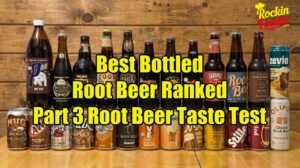
Feature Photo and Design by Brian Kachejian
We just tested some of the most popular bottled root beers you can buy, and what happened shocked both of us. Brands we expected to dominate didn’t, and one name came out of nowhere and took control of the entire round.
By the time we reached Round 3 of this 25 root beers taste test, things started to feel serious. The cans were finished, Virgil’s had already claimed the championship for that category, and now it was time to move into bottled root beers, a completely different world.
There is something about root beer in a glass bottle that carries a different expectation. Many of these brands lean into cane sugar formulas, smaller-batch production, and older-style recipes that aim to reflect what root beer used to taste like before mass production took over. That is why this round felt like it had the potential to produce the overall winner.
My son Cole and I broke this down into multiple brackets, grouping similar brands together before moving them into a final playoff. Some of these are nationally recognized names, others are regional favorites, and a few were complete unknowns to us going in.
What followed was easily the most unpredictable round of the entire competition.
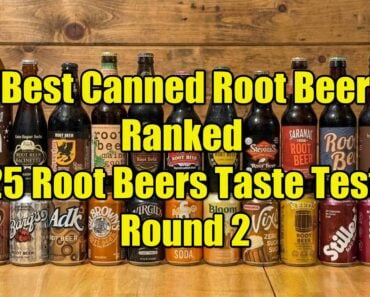
If you missed the earlier rounds, we started this series by breaking down the healthier options in our Best Probiotic and Prebiotic Root Beer Ranked Round 1 Taste Test, followed by the major brands in our Best Canned Root Beer Ranked Round 2. Both rounds set the stage for what turned out to be the most competitive category yet.
Bracket 1 Hanks vs IBC vs Stewart’s vs Boylan
This was the group we expected to deliver the winner. These are the names most people point to when they talk about high quality bottled root beer.
Hanks Root Beer
Hank’s Root Beer represents a very different approach to the category, one that looks back to older recipes while positioning itself as a premium, small-batch alternative to mass-produced sodas. The company was founded in 1995 in the Philadelphia area, but the root beer itself is based on a much older formula. The founders specifically sought out a recipe rooted in traditional Philadelphia root beer history, a region that played a major role in the early commercial development of root beer in the United States.
Instead of following the modern soda model built around high-fructose corn syrup and uniform flavor, Hank’s was developed using pure cane sugar and a recipe designed to emphasize richness and depth. That formula leans heavily on vanilla for creaminess while incorporating traditional herbal elements that give it a layered, full-bodied profile.
From the beginning, Hank’s positioned itself as a “gourmet” root beer, long before that term became common in the soda world. The company focused on glass bottle presentation, smaller distribution, and a product that felt closer to an old-fashioned soda fountain drink than something mass-produced for national chains.
That identity is important, because Hank’s is not trying to compete on familiarity like A&W or on sharpness like Barq’s. It is built to deliver a richer, smoother, more complete flavor experience, and that design shows up immediately when you taste it.
Brian: 8
Cole: 8
When we started this bracket, Hank’s set the tone right away. The first thing that stood out was the depth. Strong vanilla presence, noticeable licorice notes, and a smooth but full body that carried from the first sip through the finish.
It had something the others didn’t, a layered profile. You could taste multiple elements working together instead of just one dominant note. The carbonation was balanced, the sweetness was controlled, and nothing felt out of place.
That combination made it very hard to beat. Even when we moved through IBC, Stewart’s, and Boylan, everything kept coming back to Hank’s as the most complete root beer in the group.
This is the kind of root beer that feels like it was designed carefully, not just manufactured. And in a head-to-head competition like this, that attention to detail made the difference.
IBC Root Beer
IBC Root Beer comes from a very specific moment in American history, and that context explains a lot about what it is today. The brand was created in 1919 in St. Louis, Missouri, by the Griesedieck family as part of the Independent Breweries Company.
That timing is not a coincidence. 1919 marked the beginning of Prohibition, when breweries across the country were forced to stop producing alcohol. Many of them pivoted into non alcoholic beverages, and root beer quickly became one of the most popular alternatives. IBC was built directly out of that shift, created by brewers who already understood how to craft beverages with depth and consistency.
Unlike some brands that developed later with mass production in mind, IBC’s origins are tied to brewing traditions. That background helped shape its identity as a more traditional, straightforward root beer. Over time, the original company dissolved, but the root beer survived and changed ownership multiple times, eventually becoming part of larger beverage groups and expanding into national distribution.
What kept IBC relevant through all those changes was its positioning. It never tried to be the boldest like Barq’s or the smoothest like A&W. Instead, it settled into a middle ground, delivering a classic root beer flavor that feels familiar and reliable. Its glass bottle presentation also became part of its identity, reinforcing that old soda fountain feel that traces back to its early years.
Brian: 7
Cole: 7.5
When we got to IBC in this bracket, it was clear right away that it was solid but also at a disadvantage. Coming directly after Hank’s, which had a much deeper and more layered profile, IBC felt simpler.
The flavor was clean and balanced, nothing off-putting, nothing overly aggressive. It had that classic root beer taste that most people would recognize immediately. But it did not build the way Hank’s did. It stayed in one lane from start to finish.
That consistency is part of what makes IBC popular, but in a head-to-head comparison, it can also hold it back. It does not push hard enough in any direction to separate itself.
In this round, that meant it held its ground, but it never took control.
Stewart’s Root Beer
Stewart’s Root Beer comes straight out of the golden age of American drive-in culture, and that background defines everything about the brand. It began in 1924 in Mansfield, Ohio, when schoolteacher Frank Stewart developed his own root beer recipe and started selling it from a roadside stand to supplement his income.
That simple idea turned into something much bigger. Stewart’s quickly expanded into a chain of root beer stands and drive-ins, becoming part of a growing American car culture where people would pull up, order a frosty mug, and sit in their cars enjoying a drink. The brand became closely tied to that experience, which is why even today it carries a strong sense of nostalgia.
For decades, Stewart’s was primarily a fountain drink served at its restaurant locations. It did not move into bottled distribution until 1990, when the bottling rights were acquired and the brand began expanding into retail stores. That shift brought it into direct competition with other bottled root beers, but it kept its original identity intact.
What sets Stewart’s apart is its focus on recreating that old-fashioned soda fountain experience. It is typically made with cane sugar, caffeine-free, and built around a smooth, creamy profile rather than a sharp or aggressive one. The goal is not intensity, it is familiarity, the kind of root beer that reminds people of classic floats and summer afternoons at a drive-in.
That positioning puts Stewart’s in an interesting spot. It is not trying to be bold like Barq’s or layered like Hank’s. It is built to deliver a clean, nostalgic, easy-drinking root beer that feels consistent from start to finish.
Brian: 7.8
Cole: 7.9
When we got to Stewart’s in this bracket, it delivered exactly what its history suggests. Smooth, slightly creamy, and easy to drink. There was nothing harsh about it, and it carried that classic root beer feel right through the finish.
But when placed directly next to Hank’s, the difference became clear. Stewart’s stayed in one lane. It was consistent, but it did not build or evolve the way Hank’s did.
That is really the story here. Stewart’s gives you exactly what you expect, and for a lot of people, that is the appeal. But in a head-to-head competition where depth and complexity matter, it did not have enough to take control of the bracket.
Boylan Root Beer
Boylan Root Beer carries one of the longest continuous histories in the bottled soda world, and that history shapes everything about how it tastes today. The company was founded in 1891 in Paterson, New Jersey, when pharmacist William Boylan created an herbal elixir derived from birch trees and began selling it from a barrel in the back of a wagon.
That origin matters, because Boylan did not start as a mass-produced soda company. It started as a small, handcrafted product rooted in pharmacy culture, where early soft drinks were often positioned as tonics. Over time, that original birch-based formula expanded into a full line of sodas, including root beer, but the company never abandoned its commitment to traditional methods.
Unlike many large soda brands that transitioned fully into high-volume production, Boylan maintained a strong identity built around small-batch production, glass bottle packaging, and the use of pure cane sugar instead of high-fructose corn syrup. That decision alone places it closer to brands like Hank’s and Virgil’s than to mainstream supermarket sodas.
Flavor-wise, Boylan root beer leans heavily into traditional herbal notes. Its formula uses a blend of ingredients such as sweet birch, vanilla, cinnamon, and wintergreen to recreate a classic sassafras-style profile. The result is a root beer that is both creamy and slightly spiced, with a deeper flavor than most standard brands.
What Boylan represents in this competition is tradition with consistency. It is not as aggressively bold as Barq’s, and not as modern-craft as Virgil’s, but it sits in that middle ground where old-school formulation meets reliable production. That balance is what has kept it relevant for more than a century.
Brian: 7.8
Cole: 7.99
When we got to Boylan in this bracket, it delivered exactly what its history suggests. There was a clear sweetness from the cane sugar, backed by a smooth texture and noticeable herbal notes underneath.
It was solid across the board. Nothing was off, nothing was weak, and it carried a classic root beer feel from start to finish.
But in this particular matchup, that consistency worked against it. Hank’s brought more depth and a stronger layered profile, while Boylan stayed more linear in comparison.
It held its ground, but it never took control. And in a bracket this competitive, that was the difference.
Bracket 1 Winner: Hanks
Hank’s Root Beer takes the win in this round, separating itself with a deeper, more layered flavor that held up from start to finish. When everything was compared side by side, it was the only one that consistently stood above the rest.
Bracket 2 Maine Root vs Ithaca vs Saranac
This bracket completely flipped expectations.
Maine Root Beer
Maine Root Beer represents a completely different philosophy compared to most of the brands in this competition. Instead of building around mass production or traditional soda formulas, the company focused on creating a product centered on ingredient quality and sourcing. Based in Portland, Maine, the brand positioned itself early on as one of the first soft drink companies to use Fair Trade Certified organic sugar, working directly with growers to ensure both quality and sustainability in its supply chain
That decision alone sets Maine Root apart from most root beer brands on the market. While many traditional sodas rely on high-fructose corn syrup or artificial flavoring, Maine Root builds its formula around organic cane sugar and a simplified ingredient list. The root beer itself is made from carbonated water, Fair Trade Certified organic cane sugar, and a blend of spices, remaining completely caffeine-free
Flavor-wise, the approach is closer to early root beer traditions than modern soda. The recipe uses extracts of wintergreen, clove, and anise, giving it a profile that leans more toward herbal and less toward sweet than most mainstream brands. That style reflects the original roots of root beer, which historically relied on a wide range of herbs and spices rather than a single dominant flavor
What Maine Root represents in this competition is the modern “natural” movement applied to a classic American drink. It is not trying to compete with brands like A&W or Barq’s on familiarity, and it is not even trying to match the layered richness of something like Hank’s. Instead, it offers a cleaner, more ingredient-driven version of root beer that focuses on simplicity and authenticity.
Brian: 1
Cole: 1
When we started this bracket, Maine Root immediately stood out, but not in the way we expected. The flavor came across extremely light, almost thin, compared to everything we had just tasted in the previous bracket.
There was a noticeable herbal quality, but it lacked the sweetness and body that most people associate with root beer. Instead of building into a full flavor, it felt like it stayed at a lower level throughout.
This is one of those cases where the philosophy behind the product is clear, and you can respect what they are trying to do, but in a direct taste test against more traditional root beers, it struggled to compete.
In this round, it never found its footing, and that set the tone for the rest of the bracket.
Ithaca Root Beer
Ithaca Root Beer comes out of the Finger Lakes region of New York and is tied directly to the Ithaca Beer Company, which was founded in 1998 and built its reputation in the craft beverage world before expanding into non-alcoholic sodas. That background matters, because Ithaca approaches root beer more like a brewed product than a standard soft drink, carrying over the same attention to ingredients and formulation that defines craft brewing.
Unlike traditional soda brands that rely on a single dominant flavor, Ithaca Root Beer is built around a complex mix of ingredients designed to create a layered profile. The formula uses pure cane sugar along with Panama bark extract, hops, star anise, juniper berries, and vanilla bean, giving it a flavor that develops as you drink it rather than staying in one place.
That combination creates something much closer to an old style herbal root beer. The body is rich and creamy, but underneath that is a noticeable spice profile that leans into anise and wintergreen notes. Instead of pushing sweetness to the front, Ithaca balances the sugar against those spices, which gives it a more pronounced and sometimes unexpected taste compared to mainstream root beers.
What Ithaca represents in this competition is the craft interpretation of root beer. It is not trying to be smooth and familiar like A&W, and it is not trying to hit hard like Barq’s. It is built to be complex, something you can actually sit with and pick apart, sip by sip.
Brian: 9
Cole: 7
When we got to Ithaca in this bracket, it immediately stood out. The flavor was bold, different, and much more intense than what we had just tasted with Maine Root.
The first thing that hit was that strong sarsaparilla and spice presence. It felt deeper, more developed, and much more interesting. For me, that pushed it near the top of the entire competition.
But this is where it split. Cole picked up on that same intensity and pushed back on it. It did not feel like a traditional root beer to him, and that made it harder to score at the same level.
That is really the story of Ithaca. It is not built for everyone, but if you are looking for something with depth and character, it absolutely delivers.
Saranac Root Beer
Saranac Root Beer carries something most of the other brands in this competition don’t, a direct connection to one of the oldest family-owned breweries in the United States. It comes from the F.X. Matt Brewing Company in Utica, New York, a business that dates back to 1888 and has remained in the same family for four generations.
That history matters, because this is not a company that jumped into soda recently. During Prohibition, when alcohol production was banned, the brewery survived by producing soft drinks and non-alcoholic beverages, keeping the operation alive while many others shut down. That experience carried forward, and by the 1960s the company had returned to making root beer again, initially for visitors at the brewery before expanding into broader distribution.
By the early 1990s, Saranac began bottling its root beer for retail, bringing a product built on brewing tradition into direct competition with national soda brands. Unlike many large soda companies, Saranac approaches root beer from a brewer’s perspective. That shows up in how the drink is structured, balanced carbonation, a controlled sweetness, and a flavor profile that blends creamy vanilla with traditional root beer spice elements like wintergreen and sassafras.
What makes Saranac stand out is that balance. It does not try to overpower you, and it does not fade away either. It sits right in that pocket where everything works together, sweetness, spice, carbonation, and finish. That consistency is what has kept it relevant for decades, especially in the Northeast where it carries strong regional loyalty.
Brian: 8
Cole: 9.5
When we got to Saranac in this bracket, it immediately felt like a return to what root beer is supposed to be. Clean, classic, and balanced from start to finish.
After the extremes we had just tasted with Maine Root and Ithaca, this one landed right in the middle in the best possible way. The flavor was steady, the sweetness was controlled, and it never tried to do too much.
This is where Cole really locked in on it. That balance is what pushed his score higher, because it delivered exactly what you expect from a root beer without any distractions.
In a bracket that started out all over the place, Saranac brought everything back to center, and that is what carried it forward.
Bracket 2 Winner: Saranac Root Beer
Saranac Root Beer takes the win in this round, separating itself with a clean, balanced flavor that held steady from start to finish. In a bracket full of extremes, it was the only one that delivered consistency without sacrificing character.
Bracket 3 Polar vs Bowl and Basket vs Sprecher vs Johnny Ryan
This bracket showed just how big the gap can be.
Polar Root Beer
Polar Root Beer comes from one of the oldest continuously operating beverage companies in the United States, and that history carries real weight. The company traces back to 1882 in Worcester, Massachusetts, when Dennis “Boss” Crowley began producing sparkling water as part of his early beverage business.
What makes Polar different is that it did not begin as a soda company in the traditional sense. It evolved over time, moving from mineral water and spirits into carbonated beverages, especially during Prohibition, when alcohol production was no longer an option. That shift forced the company to focus on soda production, and it built a wide portfolio that eventually included root beer alongside its better-known seltzers and mixers.
Today, Polar remains a fourth-generation, family-owned business and is recognized as the largest independent soft drink bottler in the United States. Its reach is especially strong in the Northeast, where it has maintained a loyal following for decades. Unlike smaller craft brands or premium bottled sodas, Polar operates at scale, producing a wide range of beverages designed for accessibility and everyday consumption.
That positioning defines where Polar fits in a lineup like this. It is not trying to compete with Hank’s on depth or with Virgil’s on refinement. It is built as a dependable, widely available root beer, something you can find easily and drink without thinking too much about it.
Brian: 2
Cole: 3
When we got to Polar in this bracket, the difference was clear right away. Compared to the brands in the earlier rounds, it lacked presence. The flavor came across light, with very little depth or complexity.
There was nothing off about it, but there was also nothing that stood out. It did not build, it did not evolve, and it did not leave a lasting impression.
In a lineup where stronger, more developed root beers had already set the standard, Polar felt like it was playing at a different level.
And in a head-to-head competition like this, that gap was hard to ignore.
Bowl and Basket Root Beer
Bowl and Basket Root Beer represents a very different side of the soda market, the private label or store-brand category. Bowl and Basket is the in-house brand of ShopRite, designed to offer customers a lower-cost alternative to national brands while still maintaining a consistent product across its stores.
Unlike legacy soda companies that built their identity over decades, store brands like Bowl and Basket are developed with a different goal. The focus is not on creating a signature flavor or building a long-standing tradition. Instead, the goal is value, offering a product that looks similar, is priced lower, and can compete on convenience rather than brand recognition.
Bowl and Basket Root Beer is made with cane sugar rather than high-fructose corn syrup, which places it closer on paper to some of the higher-end bottled root beers in this competition. That alone suggests a more premium direction compared to older generic sodas that relied heavily on artificial ingredients.
But ingredient choice is only part of the equation. What separates great root beer from average root beer is how those elements come together, balance, depth, carbonation, and how the flavor develops as you drink it. That is where store brands often struggle, because the focus tends to be on cost efficiency rather than refining a distinctive profile.
In a lineup like this, Bowl and Basket is not trying to compete with brands like Hank’s or Saranac on history or craftsmanship. It is here as a value option, something a shopper might grab as a cheaper alternative to a name brand bottle.
Brian: 0
Cole: 1
When we got to Bowl and Basket in this bracket, the difference was immediate. The flavor felt flat, overly syrupy, and out of balance from the first sip.
There was sweetness, but it did not feel controlled. Instead of building into a fuller flavor, it just sat there without any depth or structure behind it.
Compared to everything we had tasted up to this point, it lacked identity. There was no defining note, no complexity, nothing that made you want to go back for another sip.
And in a bracket that already had weaker entries like Polar, this one still managed to fall below that level.
In a direct comparison, it simply could not compete.
Sprecher Root Beer
Sprecher Root Beer comes from a company with deep roots in the American craft beverage movement. The Sprecher Brewery was founded in 1985 in Milwaukee, Wisconsin, by Randal Sprecher, making it the city’s first craft brewery since Prohibition.
From the beginning, Sprecher approached beverages differently than traditional soda companies. Instead of mass production, the company focused on small-batch brewing techniques, applying the same principles used in beer making to its sodas. That includes its signature “fire-brewed” process, where ingredients are cooked in a gas-fired kettle rather than mixed in large industrial systems.
What really defines Sprecher Root Beer is its ingredient profile. Unlike most root beers that rely on corn syrup, Sprecher uses honey as a primary sweetener, combined with a blend of vanilla and spices to create a richer, creamier texture. The result is intended to be a full-bodied root beer with a smooth mouthfeel and a frothy head, something closer to a crafted beverage than a standard soft drink.
That approach has earned the brand a strong reputation. Sprecher’s root beer has been recognized in national taste tests, including a well-known evaluation where it ranked at the top among dozens of competitors for its balanced and complex flavor. Over time, the company has shifted more of its focus toward soda production, with root beer becoming one of its most important and recognizable products.
On paper, this is exactly the kind of root beer that should dominate a bottled competition. Craft process, premium ingredients, strong reputation. Everything is there.
Brian: 1
Cole: 2
But when we got to it in this bracket, it just didn’t show up.
Right away, the flavor felt flat compared to what we had just tasted. The depth that you expect from a craft root beer wasn’t there, and the sweetness didn’t carry the way it should have.
There was nothing offensive about it, but there was also nothing that stood out. It didn’t build, it didn’t evolve, and it didn’t leave any kind of impression.
That’s what made this one surprising. With its background and reputation, you expect it to be right at the top. Instead, it ended up near the bottom of the entire round.
And in a competition like this, where everything is being judged side by side, that gap becomes impossible to ignore.
Johnnie Ryan Root Beer
Johnnie Ryan Root Beer comes out of Niagara Falls, New York, and its story goes back to 1935 when the Johnnie Ryan Bottling Company was founded by the Janik brothers. That origin places it right in the middle of the era when regional soda companies were still a major part of American life, long before national brands took over most of the shelf space.
From the beginning, Johnnie Ryan positioned itself as a traditional soda company built on quality ingredients rather than mass production. The brand still emphasizes the use of pure cane sugar and classic flavor extracts, sticking to the same style of formulation that defined its early years. That approach keeps it closer to older root beer traditions, where sweetness, carbonation, and herbal notes are balanced without relying on modern shortcuts.
The product itself reflects that identity. It is packaged in classic glass bottles, reinforcing that old-school soda fountain feel, and the ingredient list remains relatively straightforward, carbonated water, cane sugar, natural and artificial flavorings, and caramel color. Compared to more complex craft brands, Johnnie Ryan does not try to layer in as many competing flavor notes. Instead, it focuses on delivering a familiar, easy-to-drink root beer profile.
Flavor-wise, it leans toward a traditional herbal base with a moderate sweetness and a lighter body than some of the richer, more premium brands. It is not built to overwhelm, it is built to be approachable, something that reflects its roots as a regional, everyday soda rather than a high-end specialty product.
Brian: 3
Cole: 4
When we got to Johnnie Ryan in this bracket, it did just enough to move forward. The flavor was more drinkable than the others in this group, and it avoided the flat, syrupy issues we ran into with some of the earlier entries.
That said, it still did not come close to the top tier root beers we had already tasted. The body felt lighter, the flavor did not develop much, and it never really built into anything memorable.
This is one of those cases where being consistent and drinkable was enough to win the bracket, but not enough to stand out beyond it.
And in a group where the competition fell off quickly, that was all it needed.
Bracket 3 Winner: Johnny Ryan Root Beer
Johnnie Ryan Root Beer takes the win in this round, not by dominating, but by simply delivering a more consistent and drinkable experience than the rest of the field. In a bracket where several brands struggled to find any real footing, it was the only one that held together from start to finish.
Bottled Root Beer Playoff
At the end of the round, the finalists were clear.
Hanks
Saranac
Johnny Ryan
Hanks continued to stand out as the most complete root beer in the competition so far. It had sweetness, depth, smoothness, and a layered flavor that stayed consistent from start to finish.
Saranac proved why it has such a strong following, especially in New York. It delivered a reliable, classic root beer flavor that worked from the first sip to the last.
Johnny Ryan held its own but did not reach the level of the top two.
Final Thoughts Before the Championship
This round showed why bottled root beer carries such a strong reputation. At the top level, these drinks are more complex, more layered, and more interesting than many canned options.
It also showed how quickly things fall apart when the quality drops. The difference between the best and the rest was not small, it was obvious.
Now everything comes down to the final stage.
Hanks and Saranac move forward, and the bottled champion will face Virgil’s, the canned champion, in the ultimate root beer showdown.
That is where we decide the best root beer overall.
Watch the full Round 3 bottled root beer taste test below as Cole and I go head to head with some of the most popular and widely available brands. This is where we put them all side by side in real time, no edits, no second guesses, just honest reactions as we work our way through the lineup and figure out which ones deserve to move on.