Last Updated on January 26, 2026 by Brian Kachejian

Feature Photo Licensed from Shutterstock
The World Poutine Eating Championship takes place annually at Yonge Dundas Square in Toronto, Ontario, and has been the largest professional eating contest in Canada since 2010. Sponsored by Smoke’s Poutinerie, the event is held in the heart of downtown Toronto, transforming one of the country’s busiest public spaces into a competitive-eating arena. The scale of the location and the size of the crowd set this contest apart from most food challenges on the circuit.
Yonge Dundas Square is known for concerts, public events, and constant pedestrian traffic, making it an unusually prominent venue for an eating competition. During the championship, the square is partially shut down, stages are erected, and large crowds gather to watch professional eaters compete under intense conditions. The urban setting contributes to the event’s high energy atmosphere and reinforces its status as a major public spectacle.
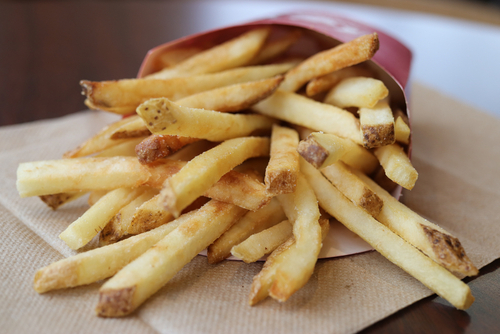
The contest challenges competitors to consume as much poutine as possible in ten minutes. Poutine consists of French fries topped with cheese curds and hot gravy, a combination that becomes increasingly difficult to eat as it cools and thickens. Unlike lighter foods, poutine gains weight and density as time passes, making pacing a critical factor from the opening seconds.
The physical difficulty of the contest is driven by multiple factors. The fries are filling, the cheese curds add chew resistance, and the gravy introduces heat and moisture that accelerate fullness. As the mixture settles, it compacts in the stomach, limiting capacity quickly. This makes the contest one of the most physically demanding events in competitive eating, even for elite professionals.
Joey Chestnut holds the world record at the World Poutine Eating Championship, consuming twenty eight pounds of poutine under official competition conditions. This performance established his dominance at the event and remains one of the heaviest recorded food totals achieved in a ten minute contest. The record highlights the extreme volume required to compete at the highest level.
Smoke’s Poutinerie plays a central role in the event’s identity. The restaurant chain is known for oversized portions and creative variations on traditional poutine. By sponsoring the championship, Smoke’s positioned the contest as both a celebration of Canadian comfort food and a platform for competitive eating. The branding is tightly integrated into the event without altering the core challenge.
The atmosphere surrounding the championship is often described as concert-like rather than culinary. Music, announcers, crowd interaction, and large screens create an atmosphere reminiscent of a street festival or live performance. This approach has helped the event attract spectators who may not normally follow competitive eating.
The contest’s timing and presentation emphasize endurance under pressure. Ten minutes is long enough for fatigue to become a decisive factor, but short enough to force aggressive pacing. Competitors who start too slowly fall behind quickly, while those who rush often struggle to maintain momentum as the poutine thickens.
Logistically, the championship is one of the most complex eating events to stage. Large quantities of poutine must be prepared and served at consistent temperatures and densities. Judges must monitor consumption closely to ensure compliance with rules and accurate measurement of totals.
The event’s popularity has contributed to the mainstream visibility of competitive eating in Canada. Unlike many contests that are confined to fairs or restaurants, the World Poutine Eating Championship occupies a central public space, exposing thousands of casual observers to the sport in real time.
Culturally, the contest reflects Canada’s relationship with poutine as a national dish. Transforming it into a competitive challenge introduces exaggeration without diminishing its cultural significance. The event balances humor and excess while still treating the food itself as iconic.
Within the broader landscape of legendary food contests, the World Poutine Eating Championship stands out for its combination of volume, density, heat, and public scale. Few contests demand as much physical endurance while also operating under such intense public scrutiny.
As part of this series, the championship represents the point where food competition intersects with large scale public entertainment. The closing of Yonge Dundas Square for a poutine eating contest illustrates how deeply food culture, spectacle, and competition have merged in the modern era.