Last Updated on February 4, 2026 by Brian Kachejian
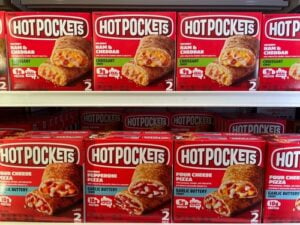
For nearly forty years, the experience of eating a Hot Pocket was inextricably linked to a specific piece of cardboard engineering known as the crisping sleeve. This silver-lined sheath, technically called a susceptor, was designed in the early 1980s to solve a physics problem inherent to microwave cooking. Microwaves heat water molecules efficiently but fail to create the dry radiant heat necessary for browning, often leaving bread products rubbery or soggy. The sleeve worked by absorbing microwave energy and converting it into conductive heat, essentially frying the surface of the dough while the waves cooked the interior. However, in June 2024, Nestlé USA officially retired the crisping sleeve from its packaging, ending a four-decade era of microwave snacking and fundamentally changing how the product is prepared.
The primary driver behind this decision was a massive corporate push toward sustainability and waste reduction. Nestlé announced that by eliminating the sleeve, they would save approximately 3,300 tons of paper waste annually, which they estimated to be enough material to wrap around the world twice or the equivalent weight of 550 elephants. As consumers have become increasingly conscious of environmental impact and excess packaging, the single-use nature of the susceptor sleeve became a target for optimization. The company determined that the environmental cost of manufacturing millions of metal-lined cardboard tubes no longer aligned with its broader goals of reducing its carbon footprint and simplifying its supply chain.
To mitigate consumer backlash against the removal of such a familiar tool, Nestlé coupled the announcement with a reformulation of the product itself. The company claimed that improvements in its dough technology allowed the crust to achieve an acceptable texture without the need for direct-contact heating from the sleeve. Furthermore, they attempted to distract from the loss of the crisping agent by increasing the amount of premium ingredients, specifically adding 30% more pepperoni to the pizza varieties. This trade-off was framed as a value add, with the consumer losing a piece of cardboard but gaining a heartier, more filling snack.
The decision also reflects a significant shift in the landscape of American home kitchens, specifically the meteoric rise of the air fryer. When Hot Pockets were introduced in 1983, the microwave was the only rapid cooking appliance in most homes. Today, the ubiquity of air fryers and high-speed convection ovens has rendered the susceptor sleeve largely obsolete for many users. Nestlé acknowledged that a growing segment of its customer base had already abandoned the sleeve in favor of these modern appliances, which provide a far superior crunch than the cardboard ever could. By retiring the sleeve, the brand has effectively signaled that the era of microwave dependency is fading, encouraging consumers to embrace cooking methods that treat the Hot Pocket more like a miniature calzone and less like a science experiment.
Check out similar articles on RockinFoodie.com. Just click any of the links below.
Read More: The 5 Best Ways To Cook A Hot Pocket
Top 20 Food Eating Contests Of All Time article published on RockinFoodie.com© 2026
RockinFoodie.com claims ownership of all its original content and Intellectual property under United States Copyright laws and those of all other foreign countries. No one person, business, or organization is allowed to republish any of our original content anywhere on the web or in print without our permission. All photos have been professionally photographed by rockinfoodie.com staff and are copyright-protected. Photos not produced by staff are either public domain Creative Commons photos or licensed officially from Shutterstock. Any theft of our content will be met with swift legal action against the infringing websites.