Last Updated on January 13, 2026 by Brian Kachejian

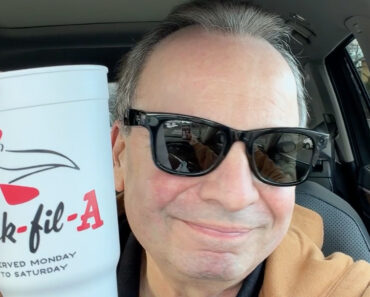
My recent experience with Chick-fil-A’s Golden Cup contest got me thinking about all the lottery-style promotions fast food chains have used to pull people through their doors. These are not just giveaways or marketing stunts. They are carefully designed games built around anticipation, scarcity, and the thrill of possibly winning something more than a meal. And when you start talking about this kind of food-driven psychology, there is no place to begin other than with McDonald’s.
This piece continues a new series focused on the psychology of food, how promotions work on us, why we keep coming back, and what these contests reveal about the way we think. It is fascinating, occasionally uncomfortable, and a little bit scary once you realize how effective it all is. I find this very interesting because it proves just how stupid we can become in search of the thrill of victory, even if it’s just a bag of French Fries.
Limited-time offerings have become a staple of fast food marketing in the United States, and these periodic menu items often trigger intense consumer response that many food marketers would describe as spontaneous or irrational. While the specific items change from year to year, the underlying dynamics remain consistent: scarcity framed as exclusivity, time pressure framed as opportunity, and a consumer belief that missing out would be regrettable. When introduced successfully, limited-time items can transform ordinary demand into a kind of urgency that overrides rational decision-making.
One of the earliest and most iconic examples of a limited-time item is the McDonald’s McRib sandwich. First introduced nationally in 1981, McDonald’s has repeatedly brought it back many times, often framing its reappearance as a special event. The McRib is a boneless pork sandwich with barbecue sauce, onions, and pickles on a roll, and its availability has never been permanent. Instead, McDonald’s intentionally cycles the McRib off menus and then reintroduces it periodically. The pattern of disappearance and reappearance, repeated over decades, has elevated the sandwich beyond its ingredients and into the realm of a cultural phenomenon.
Another high-visibility, limited-time item is the Shamrock Shake, which McDonald’s first offered in 1970 to coincide with St. Patrick’s Day. The green mint-flavored shake returns annually in late winter, usually from February through March. While the shake itself is only on menus for a few weeks, the anticipation of its reappearance has become part of its cultural identity. Social media conversations, media coverage, and customer excitement each year help reinforce the idea that the item is special precisely because it comes and goes.
Seasonal promotions have extended well beyond a single item or holiday. In the early 21st century, pumpkin spice-flavored items began appearing at fast-food and coffee chains. Starbucks popularized the Pumpkin Spice Latte in 2003, and McDonald’s, Dunkin’, and other chains followed with their own seasonal products. The pattern of pumpkin spice items reappearing each fall creates a predictable cycle of anticipation that blends food preferences with seasonal emotion. While pumpkin spice is technically a flavor profile, its annual return creates a sense of scarcity that drives early purchases and repeat visits.
Taco Bell has also leveraged limited-time items to generate buzz and impulse purchases. For example, the Doritos Locos Tacos, introduced in 2012, were initially offered as a limited-time item and quickly became a permanent menu staple due to overwhelming demand. Other items, such as seasonal variations of the Crunchwrap or promotional tacos tied to events, are explicitly time-restricted. When these items are announced, Taco Bell customers often seek them out before they vanish, even if their regular menu choices would otherwise suffice.
The psychological effect of a limited-time item begins with scarcity, a concept rooted in behavioral economics. Scarcity suggests that when something is perceived to be less available, it appears more valuable than identical items available indefinitely. In plain terms, people want what they might not be able to have. Limited-time offers exploit this bias by creating artificial scarcity through time boundaries rather than supply limits. Although a chain may produce millions of seasonal items, the belief that they will eventually disappear triggers a response similar to a true shortage.
Closely related to scarcity is urgency, a sense that there is a deadline to consider before the opportunity expires. Urgency is often communicated through time framing, such as “for a limited time only” or “available this season.” When consumers perceive that an opportunity will end, they feel pressure to act quickly rather than delay or think critically. This urgency can prompt people to purchase items sooner, revisit restaurants more frequently, or justify impulse purchases they would otherwise resist.
Anticipation also plays an important role. Limited-time offerings are often announced before they actually hit menus, and in the period between announcement and availability, potential customers begin to form expectations. Anticipation itself is pleasurable because the brain releases dopamine when expecting a reward. By delaying the product’s actual release, marketers amplify this effect. When the item finally arrives, customers are primed to feel excited rather than neutral.
Social proof contributes to the power of limited-time items. When people see friends, influencers, or even strangers expressing excitement about a seasonal product on social media, they experience a social signal that the item is desirable. This is amplified by user-generated content showing people enjoying limited-time menu items or talking about their first taste. The result is a feedback loop: anticipation generates more visibility, which in turn generates more excitement.
Another psychological factor is nostalgia. Many limited-time items return on a yearly cycle, often tied to holidays or cultural traditions. The Shamrock Shake, for example, is associated with St. Patrick’s Day and the color green. Pumpkin spice is tied to autumn. These associations go beyond taste; they tap into memory, ritual, and comfort. Limited-time items anchored in seasonal experiences benefit from an emotional context that purely permanent menu items do not have.
The business outcomes of limited-time items are straightforward. Chains that successfully deploy seasonal offerings often see sales spikes during promotional windows. McDonald’s has reported increased foot traffic during the annual return of the Shamrock Shake. Taco Bell’s Doritos Locos Tacos drove substantial revenue growth in its first years on menus. Starbucks’ Pumpkin Spice Latte consistently ranks among its top sellers each fall. These items not only drive short-term sales boosts but also bring back customers who might not otherwise visit.
Critics have noted that limited-time offerings can contribute to impulsive spending. Because customers rush to try items before they disappear, they may make unplanned purchases, eat outside their normal habits, or pay premium prices for novelty items. Fast food chains understand and leverage this behavior, intentionally framing items to trigger urgency rather than rational decision-making.
Limited-time food items also interact with loyalty programs and digital ordering platforms. Many chains now integrate seasonal offerings into their apps, providing special digital rewards or notifications tied to limited-time products. This digital dimension reinforces both scarcity and urgency, as customers receive reminders and time-based push notifications that signal the item’s temporary status. These app-based cues can intensify the psychological pull of a seasonal item, nudging customers back into restaurants or digital carts.
Even consumers who recognize the psychological mechanisms at play are often not immune to their effects. Studies in behavioral economics show that awareness of a marketing tactic does not necessarily insulate individuals from its influence. In the context of limited-time food items, even people who intellectually understand scarcity and urgency can still experience emotional responses that lead to action.
The cumulative effect of these forces is that limited-time offerings operate not just as menu variations but as psychological triggers. They encourage visits that would not otherwise occur, create social buzz, and amplify emotional attachment to a brand. For marketers, the ability to engineer these responses is a powerful tool. For customers, the experience feels personal, momentary, and exciting rather than calculated and commercial.
Understanding why limited-time fast-food items make people act irrationally requires recognizing the blend of scarcity, urgency, anticipation, social influence, and emotional context that food chains leverage. It also highlights how deeply human responses shape our decisions in ways that are predictable, measurable, and repeatable. This is not so much about the food itself as about how the product is presented and perceived. When time becomes part of the appeal, the food becomes more than sustenance; it becomes a symbol of experience, anticipation, and opportunity.