The National Sweet Corn Eating Championship is held annually at the South Florida Sweet Corn Fiesta in West Palm Beach, Florida, and occupies a unique position in the world of competitive eating. Established in the early 2000s, the contest is notable not for excess, pain, or indulgence, but for technical precision. Unlike most eating competitions, success here depends less on volume tolerance and more on skill, control, and consistency.
The event takes place at an agricultural festival dedicated to celebrating Florida’s sweet corn industry. The South Florida Sweet Corn Fiesta draws thousands of attendees to fairgrounds that emphasize farming, regional produce, and community pride. Within this setting, the eating championship feels less like a stunt and more like a showcase of mastery over a single crop that plays a significant role in local agriculture.
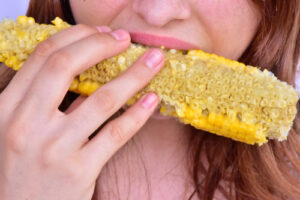
Competitors are given twelve minutes to eat as many ears of sweet corn as possible. The challenge, however, comes with a strict requirement. Participants must remove the kernels cleanly from the cob without consuming the cob itself. Each cob is inspected by judges, who check carefully for leftover kernels or debris. Ears that are not properly cleaned are disqualified, regardless of how quickly they were eaten.
This judging standard fundamentally alters the nature of the contest. Speed alone is not enough. Competitors must develop a stripping technique that balances rapid motion with accuracy. Overaggressive biting often leaves kernels behind, while overly cautious eating slows progress. The contest rewards rhythm and muscle memory rather than brute force.
Sweet corn presents a different physical challenge than dense or rich foods. It is lighter, less filling, and easier to chew, but it demands repetitive motion and sustained focus. Jaw fatigue becomes a factor not because of density, but because of repetition. The hands, neck, and facial muscles are continuously engaged throughout the twelve-minute window.
The current world record is held by Carmen Cincotti, who consumed sixty-one ears of corn under official competition rules. This record is widely regarded as one of the most technically demanding achievements in competitive eating. Maintaining consistency over dozens of ears without leaving disqualifying debris requires extraordinary control and concentration.
The contest is also unusual because it is often described as one of the few vegetable-based eating championships on the competitive circuit. While the term “healthy” is relative in the context of competitive eating, the use of fresh corn rather than processed or high-fat foods sets it apart. This distinction contributes to its broader appeal among festival attendees who might otherwise be uncomfortable with extreme eating contests.
Spectator engagement plays a major role in the event’s popularity. The visual clarity of the contest allows audiences to understand progress instantly. Clean cobs are held up, stacks accumulate, and judges’ inspections create suspense. Unlike contests where volume is hard to gauge, the outcome here is visible and easily tracked.
The agricultural context reinforces the contest’s identity. Corn is not treated as a novelty or prop. It is the centerpiece of a festival celebrating farming and regional production. The eating championship functions as an extension of that celebration, transforming a staple crop into a competitive medium without detaching it from its roots.
From a psychological standpoint, the contest rewards patience and discipline. Competitors must resist the instinct to rush, knowing that sloppiness will negate progress. This restraint distinguishes the championship from many eating contests where speed is paramount and mistakes are less consequential.
The South Florida Sweet Corn Fiesta benefits significantly from the championship’s presence. The contest attracts media attention, increases attendance, and reinforces the festival’s reputation as a destination event. Visitors who come for the eating competition often stay for the broader agricultural exhibits, live music, and food vendors.
The consistency of the event has helped it build credibility. The rules have remained stable, the judging standards have been strict, and the focus has been clear. There has been no need to escalate portion sizes or alter formats to maintain interest. The challenge is difficult enough on its own.
Within the broader landscape of legendary food contests, the National Sweet Corn Eating Championship stands out for its emphasis on skill over endurance. It demonstrates that competitive eating does not always hinge on excess. When technique becomes the limiting factor, the contest takes on a different character, one that rewards practice and precision.
As part of this series, the championship is a rare example of competitive eating closely aligned with agriculture and regional pride. It proves that a simple food, when paired with strict rules and careful judging, can produce one of the most demanding contests in the sport.
All About The National Sweet Corn Eating Championship in West Palm Beach article published on RockinFoodie.com© 2026
RockinFoodie.com claims ownership of all its original content and Intellectual property under United States Copyright laws and those of all other foreign countries. No one person, business, or organization is allowed to republish any of our original content anywhere on the web or in print without our permission. All photos have been professionally photographed by rockinfoodie.com staff and are copyright-protected. Photos not produced by staff are either public domain Creative Commons photos or licensed officially from Shutterstock. Any theft of our content will be met with swift legal action against the infringing websites.