Once again, as we continue our series on food contents and food psychology, my experience with Chick-fil-A’s Golden Cup contest highlighted how powerful the idea of free food can be, even when the reward itself is modest. I have been watching day after day the same people on TikTok going absolutely nuts trying to win this free golden cup. There’s a lady on the app who’s probably opened about 100 cups. At $4 a cup, she’s already paid more money than the prize is worth. ($340.00) Sadly, you can see her losing her mind. It brings us up to this very important point. A single free entrée per week is not a life-changing prize, yet the reaction it generated across social media and inside stores suggested something much larger was at work. This same response has appeared repeatedly throughout fast-food history whenever chains offer free food tied to events, promotions, or achievements. The emotional reaction often outweighs the actual value of what is being given away.
Fast food chains have long understood that free food triggers a psychological response distinct from that elicited by discounts or price reductions. When an item is framed as free, the perceived value increases disproportionately, even if the monetary savings are small. Behavioral economists refer to this as the zero-price effect, where consumers treat free items as categorically different from discounted ones. In fast food marketing, this effect is amplified by immediacy, convenience, and familiarity.
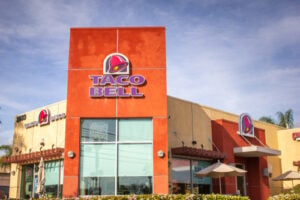
One of the most recognizable examples of this phenomenon is Taco Bell’s “Steal a Base, Steal a Taco” promotion. First introduced in 2007, the campaign promised free tacos nationwide if a base was stolen during the World Series. The reward was simple, usually a Doritos Locos Taco or standard taco, yet the event consistently generated national excitement. Customers lined up at Taco Bell locations on redemption days, sometimes waiting longer than they would for a paid meal, all for a free item valued at a few dollars.
The power of this promotion lies not in the taco itself but in the shared experience. Millions of people become eligible for the same reward simultaneously, creating a sense of collective participation. The free food becomes a symbol of belonging to a moment rather than a transaction. This collective aspect transforms a single taco into something memorable, even though the product itself remains unchanged.
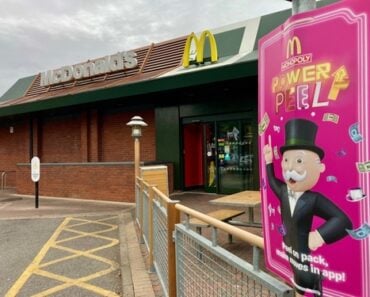
McDonald’s has used similar tactics through app-based promotions and free item days tied to sports, holidays, or app downloads. In recent years, McDonald’s has offered free fries, free sandwiches, or free breakfast items through its mobile app, often requiring only a minimal purchase or app interaction. These offers drive significant traffic to the app and restaurants, even though the food given away represents a small cost to the company. Customers frequently report going out of their way to redeem these offers, reinforcing the idea that free food motivates behavior beyond rational economic calculation.
Starbucks has also leaned heavily into free food and drink moments, particularly through its rewards program. Promotions offering free drinks after a certain number of purchases or bonus reward days consistently generate spikes in store visits. While customers technically earn these items through prior spending, framing the reward as free creates a sense of accomplishment and gratification. The reward feels earned yet still special, blending effort with perceived generosity.
Another example is Panera Bread’s Unlimited Sip Club, launched nationally in 2020. While technically a subscription service, Panera marketed the program around free drinks, emphasizing unlimited refills for a monthly fee. The language of free access proved effective, with customers frequently visiting stores simply to justify the subscription. Even when the cost-benefit calculation was marginal, the psychological satisfaction of receiving something free encouraged repeat visits.
Free food moments are often tied to urgency and limited availability, which further heighten emotional responses. When customers know that a free offer is available for only one day or a short window, they are more likely to act quickly. This urgency reduces deliberation and increases impulsive decision-making. The combination of zero price and time pressure creates a powerful incentive structure that fast food chains deploy strategically.
Social reinforcement also plays a critical role. Free food days often generate long lines, social media posts, and shared experiences. Photos of free tacos, free fries, or free coffee circulate widely, reinforcing the idea that participation is normal and desirable. Even people who initially did not plan to participate may feel compelled to join after seeing others do so. This social proof strengthens the perceived value of the free item.
There is also an element of perceived fairness and reciprocity. Customers often interpret free food promotions as gestures of goodwill from brands they already frequent. This perception fosters brand loyalty, even though the promotion is designed to increase sales. The psychological principle of reciprocity suggests that when people receive something for free, they feel an unconscious obligation to return the favor. In fast food contexts, this may translate into future purchases or positive brand sentiment.
The emotional response to free food can also override practical considerations. Customers may wait in long lines, travel out of their way, or adjust their schedules to redeem a free item. These behaviors do not align with strict cost-benefit logic but make sense emotionally. The act of winning or receiving something free provides a brief sense of reward that feels satisfying regardless of effort.
Fast-food companies track these behaviors closely. Redemption rates, app downloads, and foot traffic spikes during free food promotions provide measurable data on their effectiveness. These campaigns are rarely one-off experiments. Instead, they are refined and repeated because they consistently produce desired outcomes. Free food moments are not accidents; they are carefully engineered touchpoints designed to create engagement.
Critics sometimes argue that free food promotions encourage overconsumption or unhealthy habits. While the nutritional content of the food does not change, the promotional framing may encourage people to eat when they otherwise would not. Fast food companies typically address these concerns by emphasizing moderation and optional participation, though the behavioral pull remains strong.
What makes free food moments particularly powerful is their simplicity. Unlike complex contests or loyalty programs, free food offers are easy to understand. There is no learning curve or barrier to entry. This accessibility ensures broad participation across age groups and demographics. The reward feels immediate and tangible, reinforcing its appeal.
Over time, these moments accumulate in consumer memory. People remember free tacos on World Series days, free fries through apps, or free drinks during promotions long after the food itself is gone. These memories contribute to brand identity and shape long-term perceptions. The emotional residue of free food moments often outlasts the actual experience.
Understanding why free food moments feel bigger than they are requires recognizing how human psychology responds to zero price, urgency, social proof, and shared experience. Fast food chains do not rely solely on generosity. They rely on predictable behavioral responses that transform small rewards into meaningful events. The food may be inexpensive, but the emotional impact is not.
Feature Photo: Licensed from Shutterstock